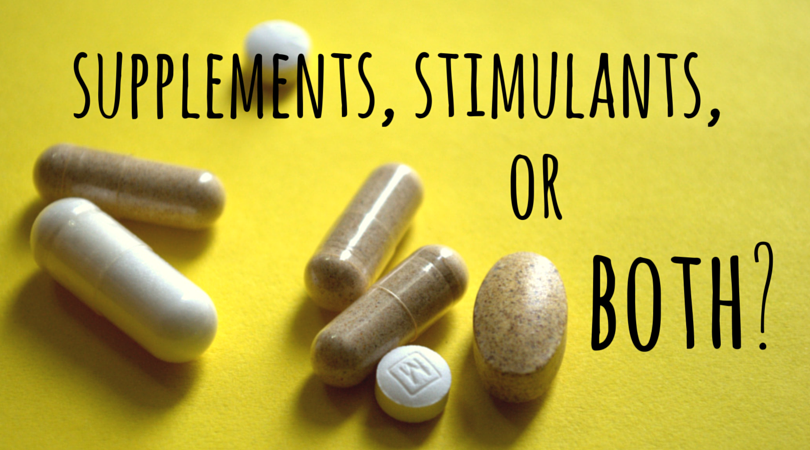
Stimulant medication makes ADHD symptoms manageable for a lot of people, but some will always choose supplements and dietary changes instead.
And some — myself included — will experiment with supplements in addition to stimulants. Stimulants have been a lifesaver for me, but I still suffer from emotional and memory problems.
After reading Daniel Amen’s Healing ADD from the Inside Out, I decided to experiment with a few of the supplements he recommends. It’s been about a month, and I’ve learned a lot.
The many faces of ADHD
ADHD doesn’t just mean lack of focus: it often comes with emotional disregulation, forgetfulness, and a host of other problems.
When I read Healing ADD, I related to Dr. Amen’s description of “temporal lobe ADD” quite a bit. While Dr. Amen’s ADD subtypes haven’t been adopted by the wider community, they can be useful to guide conversations about common groupings of symptoms.
For example, Dr. Amen describes people with temporal lobe ADD as having a quick temper (often with little or no provocation) and suffering from dark thoughts and unpredictable moods. Some are especially prone to déjà vu, and others experience odd sensory effects: objects changing shape, shadows that aren’t there, buzzing sounds, etc.
In Healing ADD, Amen goes into more detail, talking about memory issues, violent thoughts, and patients whose personalities changed completely following a minor head injury.
My experience with supplements
Intrigued by Dr. Amen’s claims about supplements, I decided to try adding GABA (gamma-aminobutyric acid) and ginkgo biloba to my standard medication routine. GABA can help with mood stabilization, while ginkgo has long been touted as a memory aid.
I can’t really say whether the ginkgo has helped my memory — it’s possible it went from unbearable to pretty bad, but that’s a crude measure — but I’ve noticed some surprising changes since starting the GABA.
GABA is actually an inhibitory neurotransmitter, meaning it keeps your brain’s activity in check (low GABA levels have been linked to anxiety and panic attacks). GABA supplement supporters claim its calming effects can soothe ADHD, anxiety, mood instability, sleep troubles, and even PMS. In some cases, Dr. Amen suggests trying it before prescription anti-convulsants like Depakote, which works by increasing GABA production.
A science-y aside: now is a good time for a reminder that correlation doesn’t necessarily imply a causal relationship, and there are very few controlled studies on the effects of supplements. Some scientists argue that GABA doesn’t cross the blood-brain barrier and, consequently, has no real effect beyond placebo.
Then again, some parents of children with autism or ADHD have reported big successes with GABA.
The reality is, there just isn’t enough science for us to be sure. All we can do is try it, and if it doesn’t work, scrap it and move on.
And what has my experience been with GABA supplementation?
Most noticeably:
Increased mood stability; tamer peaks and valleys; fewer “all-or-nothing” moods- Reduced intensity and frequency of migraines
- Reduced morning coffee cravings
This is similar to my experience during pregnancy, where I could do with coffee or tea in the morning, whereas previously I needed coffee to feel even minimally functional - Possibly even reduced overall food cravings
- Gentle lift in mood; more calm, controlled energy/motivation in the morning after taking supplement
Though I was on the lookout for mood changes, the migraines (or lack thereof) were a nice bonus, if not a surprise. While Dr. Amen goes into detail about the temporal lobes’ effect on mood, memory, and social skills, the temporal lobes also play a huge role in epilepsy and migraines. Interestingly, Depakote is prescribed for all three issues — as a mood stabilizer and to prevent seizures and migraines — so there is a clear link. I wonder how many of Dr. Amen’s temporal lobe ADD cases also suffered from migraines. (Fun fact: migraines are not all that dissimilar from seizures, so if you find them debilitating, cut yourself a break.)
While I don’t see any way a GABA supplement could eliminate the need for prescription medication, it does provide — for me, at least — a helpful boost. Of course, there’s also a chance I need to adjust my medication and dosage to manage my ADHD symptoms more effectively. There always is. But for now, combining traditional stimulant treatments with a few natural supplements seems to work better than either would on its own.
Have you tried treating ADHD with natural supplements? What was your experience?
Note: hopefully I’m stating the obvious here, but I’m by no means a doctor, and this post is not medical advice. Before starting any new supplement or natural remedy, you should check in with your doctor to make sure it’s safe for you — especially if you’re already taking other medications. Just because it’s “natural” doesn’t mean it’s zero-risk!
Hey there! Are you enjoying The ADHD Homestead?
Here's the thing: I don't like ads. I don't want to sell your attention to an advertising service run by the world's biggest data mining company. I also value my integrity and my readers' trust above all, which means I accept very few sponsorships/partnerships.
So I'm asking for your support directly. For the cost of one cup of coffee, you can help keep this site unbiased and ad-free.
Below you will find two buttons. The first lets you join our crew of Patreon pals and pledge monthly support for my work. Patrons also have access to my Audioblogs podcast. The second takes you to a simple donation page to pledge one-time or recurring support for The ADHD Homestead, no frills, no strings. Do whichever feels best for you!

GABA does indeed play a big role in mood regulation and anxiety. Drugs like Valium and Xanax actually work by enhancing the effects of GABA to cause anxiolytic and sedative effects.
I was unaware of an role it might play in migraines or seizures. I get migraines. A LOT. I have a daily prophylactic anti-seizure medication to decrease the frequency of my migraines. I wonder if your supplement would have an effect? Hmmmm….
It’s certainly possible! I’ve noticed a difference, but of course migraines are so fickle, there could be some confounding variable in there. There’s also a lot we don’t know about migraines, and each migraine sufferer has a different constellation of symptoms and triggers. My experience has made me wonder how many folks have tried GABA supplements to ease migraines.
Excellent.
The medications Intuniv, Guanfacine, etc. are commonly used with ADHD, mostly to help with mood, irritability, etc.
They target GABA. Which performs a balancing act with glutamate.
—-
Neuroscientist. 2002 Dec;8(6):562-73.
GABA and glutamate in the human brain.
Petroff OA1.
Author information
Abstract
Cortical excitability reflects a balance between excitation and inhibition. Glutamate is the main excitatory and GABA the main inhibitory neurotransmitter in the mammalian cortex. Changes in glutamate and GABA metabolism may play important roles in the control of cortical excitability. Glutamate is the metabolic precursor of GABA, which can be recycled through the tricarboxylic acid cycle to synthesize glutamate. GABA synthesis is unique among neurotransmitters, having two separate isoforms of the rate-controlling enzyme, glutamic acid decarboxylase. The need for two separate genes on two chromosomes to control GABA synthesis is unexplained. Two metabolites of GABA are present in uniquely high concentrations in the human brain. Homocarnosine and pyrrolidinone have a major impact on GABA metabolism in the human brain. Both of these GABA metabolites have anticonvulsant properties and can have a major impact on cortical excitability.
https://www.ncbi.nlm.nih.gov/pubmed/12467378
More basic info here:
J Inorg Biochem. 2004 Jun;98(6):951-8.
Relationships between glutamine, glutamate, and GABA in nerve endings under Pb-toxicity conditions.
Struzyńska L1, Sulkowski G.
Author information
Abstract
Glutamine (Gln), glutamate (Glu) and gamma-amino butyric acid (GABA) are essential amino acids for brain metabolism and function. Astrocytic-derived glutamine is the precursor of the two most important neurotransmitters: glutamate, an excitatory neurotransmitter, and GABA, an inhibitory neurotransmitter. In addition to their roles in neurotransmission these neurotransmitters act as alternative metabolic substrates that enable metabolic coupling between astrocytes and neurons. The relationships between Gln, Glu and GABA were studied under lead (Pb) toxicity conditions using synaptosomal fractions obtained from adult rat brains to investigate the cause of Pb neurotoxicity-induced seizures. We have found that diminished transport of [(14)C]GABA occurs after Pb treatment. Both uptake and depolarization-evoked release decrease by 40% and 30%, respectively, relative to controls. Lower expression of glutamate decarboxylase (GAD), the GABA synthesizing enzyme, is also observed. In contrast to impaired synaptosomal GABA function, the GABA transporter GAT-1 protein is overexpressed (possibly as a compensative mechanism). Furthermore, similar decreases in synaptosomal uptake of radioactive glutamine and glutamate are observed. However, the K(+)-evoked release of Glu increases by 20% over control values and the quantity of neuronal EAAC1 transporter for glutamate reaches remarkably higher levels after Pb treatment. In addition, Pb induces decreased activity of phosphate-activated glutaminase (PAG), which plays a role in glutamate metabolism. Most noteworthy is that the overexpression and reversed action of the EAAC1 transporter may be the cause of the elevated extracellular glutamate levels. In addition to the impairment of synaptosomal processes of glutamatergic and GABAergic transport, the results indicate perturbed relationships between Gln, Glu and GABA that may be the cause of altered neuronal-astrocytic interactions under conditions of Pb neurotoxicity.
https://www.ncbi.nlm.nih.gov/pubmed/15149801